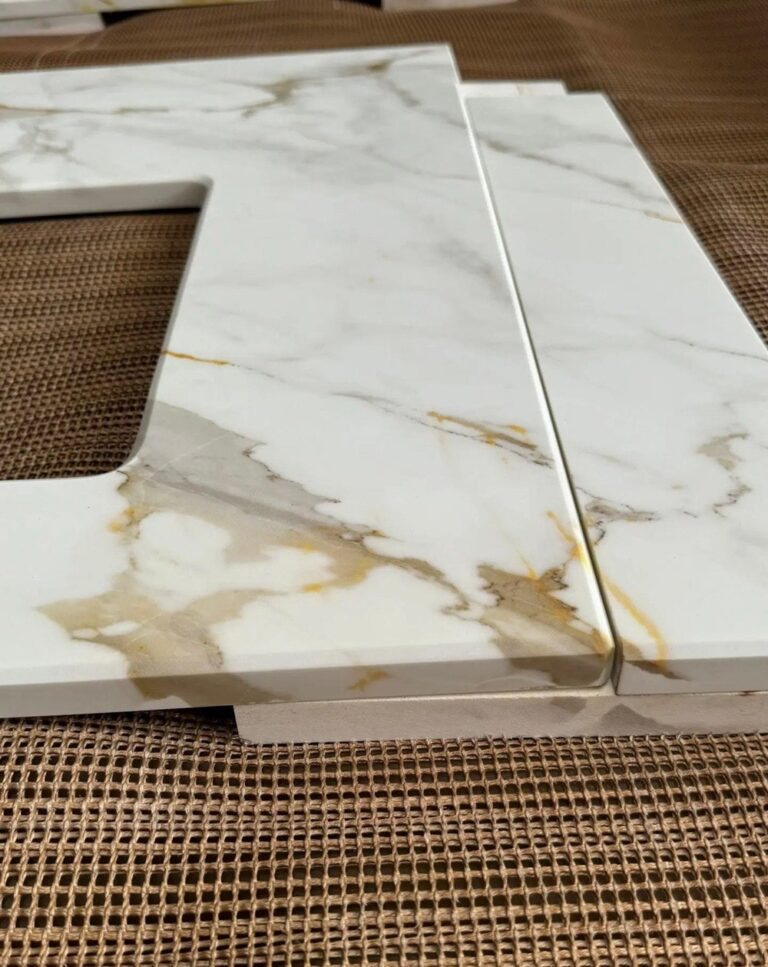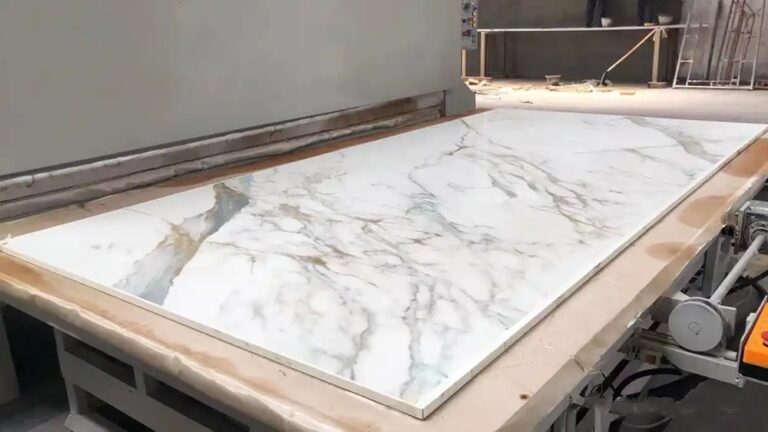

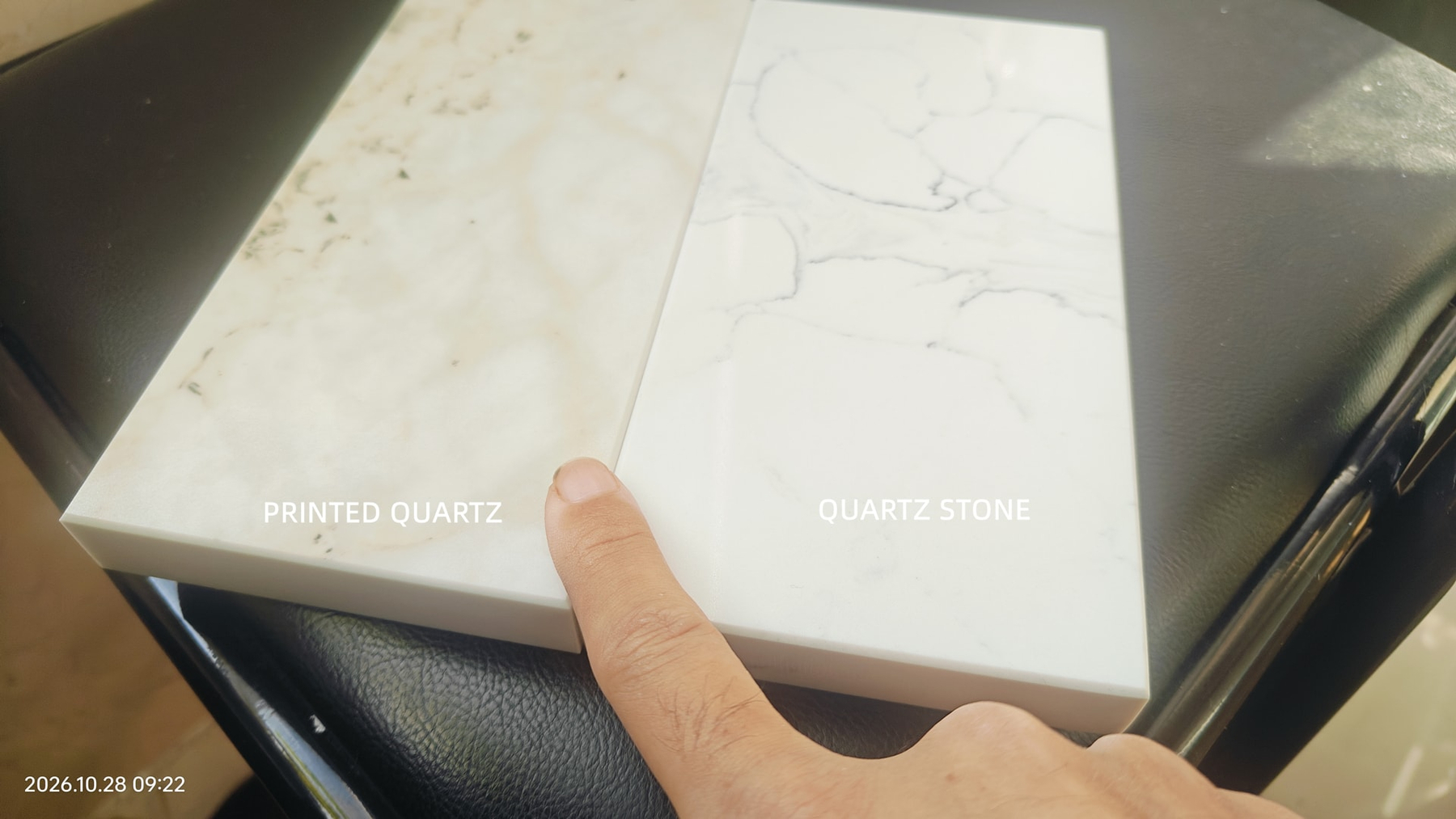
The fundamental divide lies in how the pattern and veining are formed. Traditional quartz blends colour particles and pigments into the whole slab during mixing, the pattern is made by workers; Printed quartz adds a high-definition digital inkjet printing layer on the slab surface after the base body is formed, then seals it with a protective top coat.
This single manufacturing difference creates major gaps in aesthetics, fabrication tolerance, wear risk, pricing and suitable scenarios. Many homeowners, cabinet makers, fabricators and commercial project buyers struggle to tell them apart, especially when evaluating marble-look Calacatta, statuario and luxury stone finishes. This guide breaks down every critical factor, with a full comparison table, pros and cons and buying advice.
Traditional Quartz = Engineered Quartz = Quartz Stone = Artificial Quartz
Printed Quartz = Digital Printed Quartz = Heat Transfer Quartz
What Is Traditional Quartz?
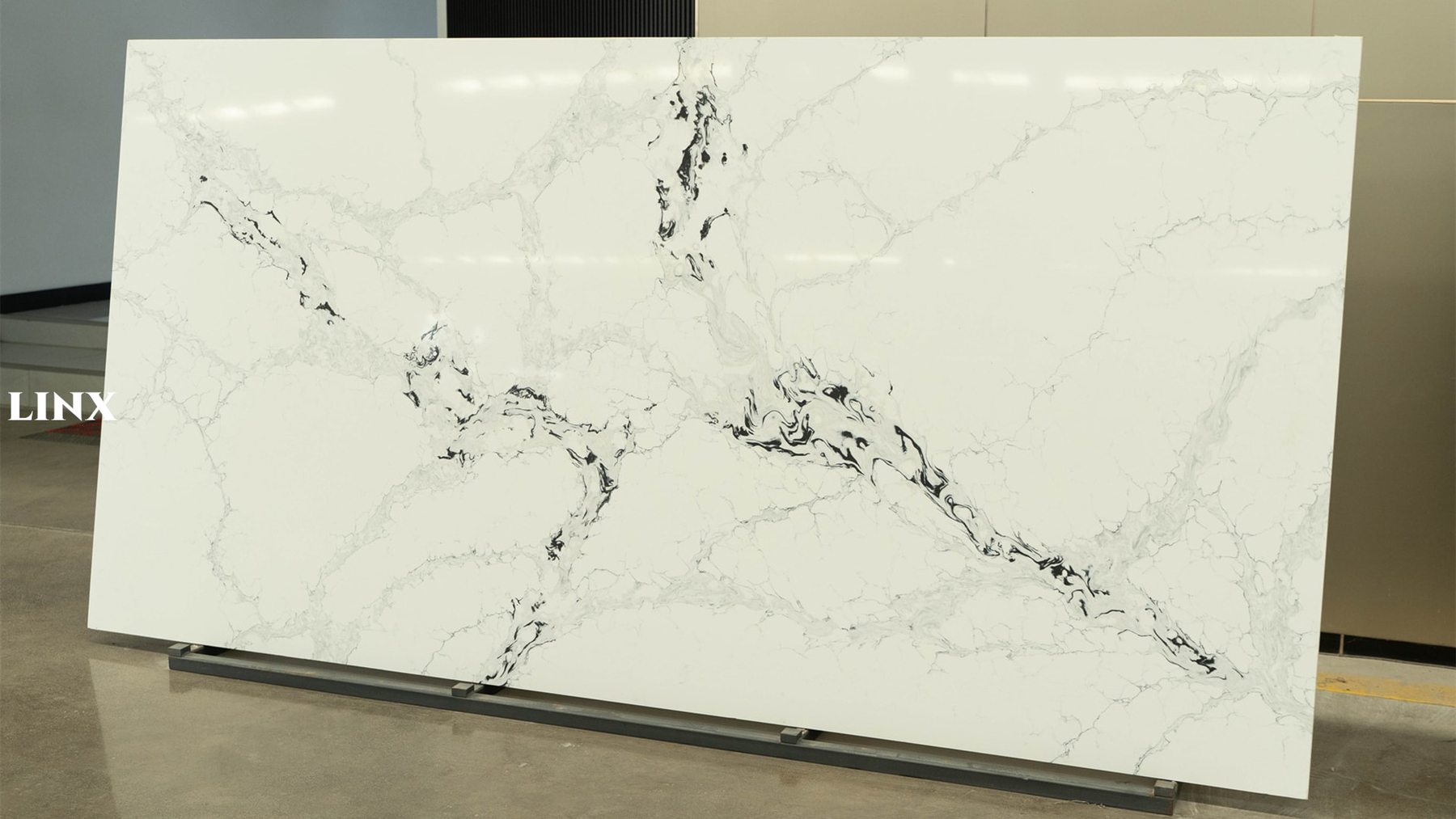
Traditional quartz is the standard engineered quartz that has dominated the countertop market for decades. All colour, speckles and veining are mixed homogenously inside the slab during the batching stage before pressing and curing. Veins and colour particles run through the body of the slab, not just sitting on the surface.
Patterns are generated by mixing different coloured quartz chips and mineral pigments. It can produce solid colours, fine speckles and soft, diffused veining. However, complex, continuous, high-contrast marble-style veins are difficult to achieve, and large-area installation often shows repetitive or limited veining movement.
Because colour and pattern are integral to the slab body, cutting, edging, polishing and surface abrasion will not remove the pattern. Even after heavy surface wear, the colour and particle texture remain consistent on the exposed edge. This makes traditional quartz extremely forgiving for standard kitchen fabrication, edge profiling, sink cutouts and reshaping.
What Is Printed Quartz Stone?
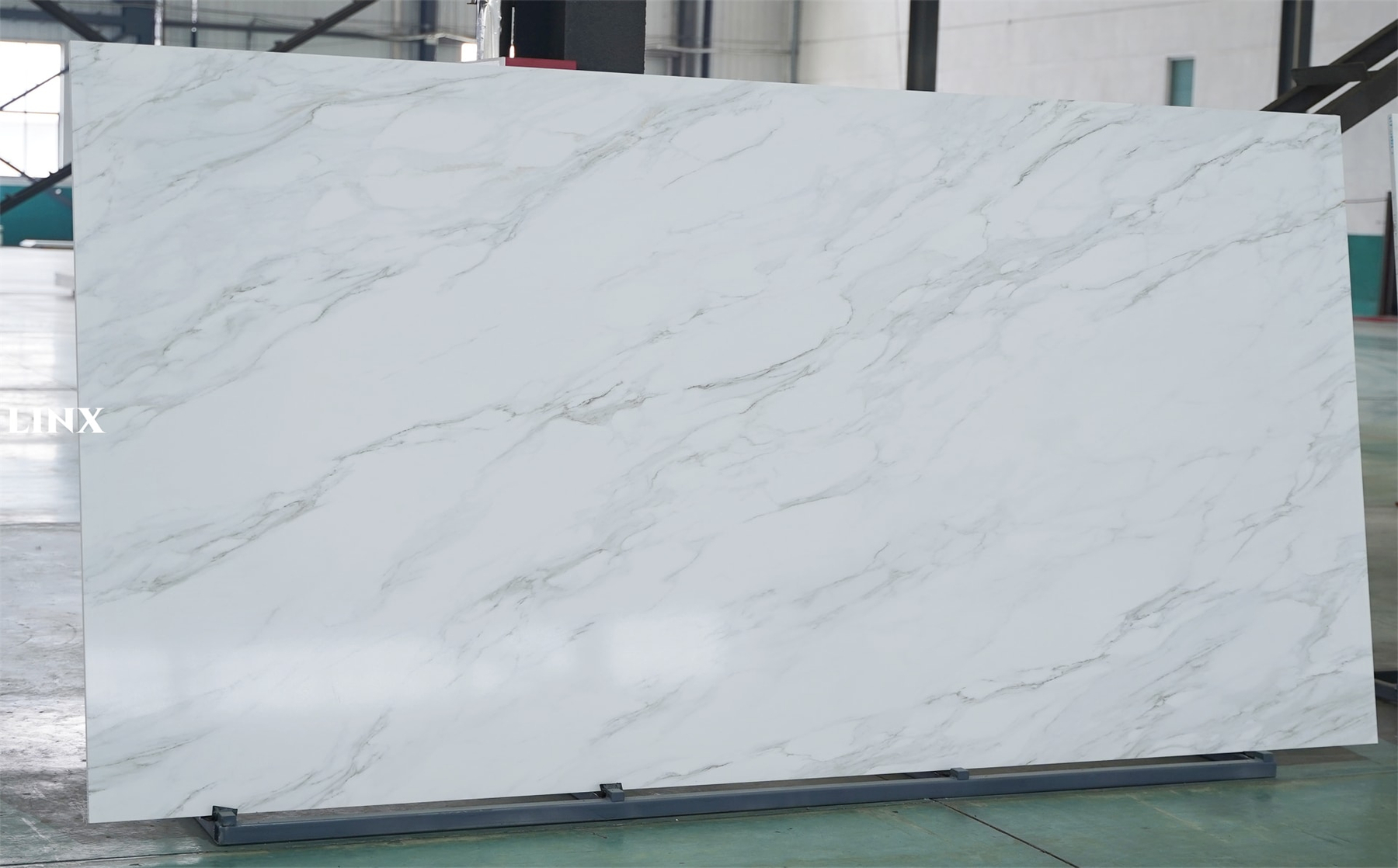
Printed quartz stone, also known as digital printed quartz slab, is an upgraded decorative engineered quartz. Its substrate is identical standard quartz base, but the decorative vein, texture and shading are applied by high-resolution digital inkjet printing onto the slab surface, then covered by a transparent protective layer (UV coating or resin seal coat).
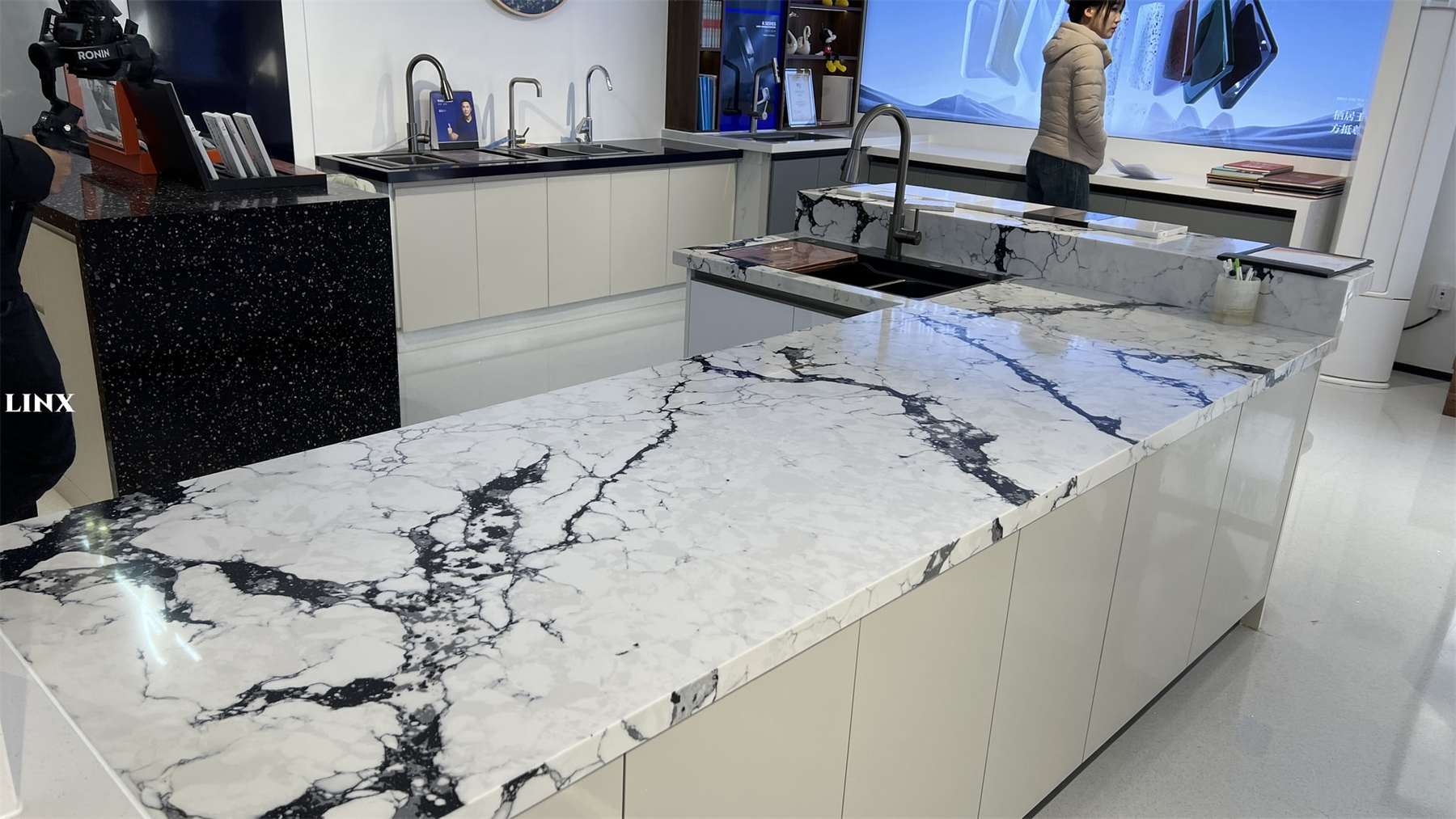
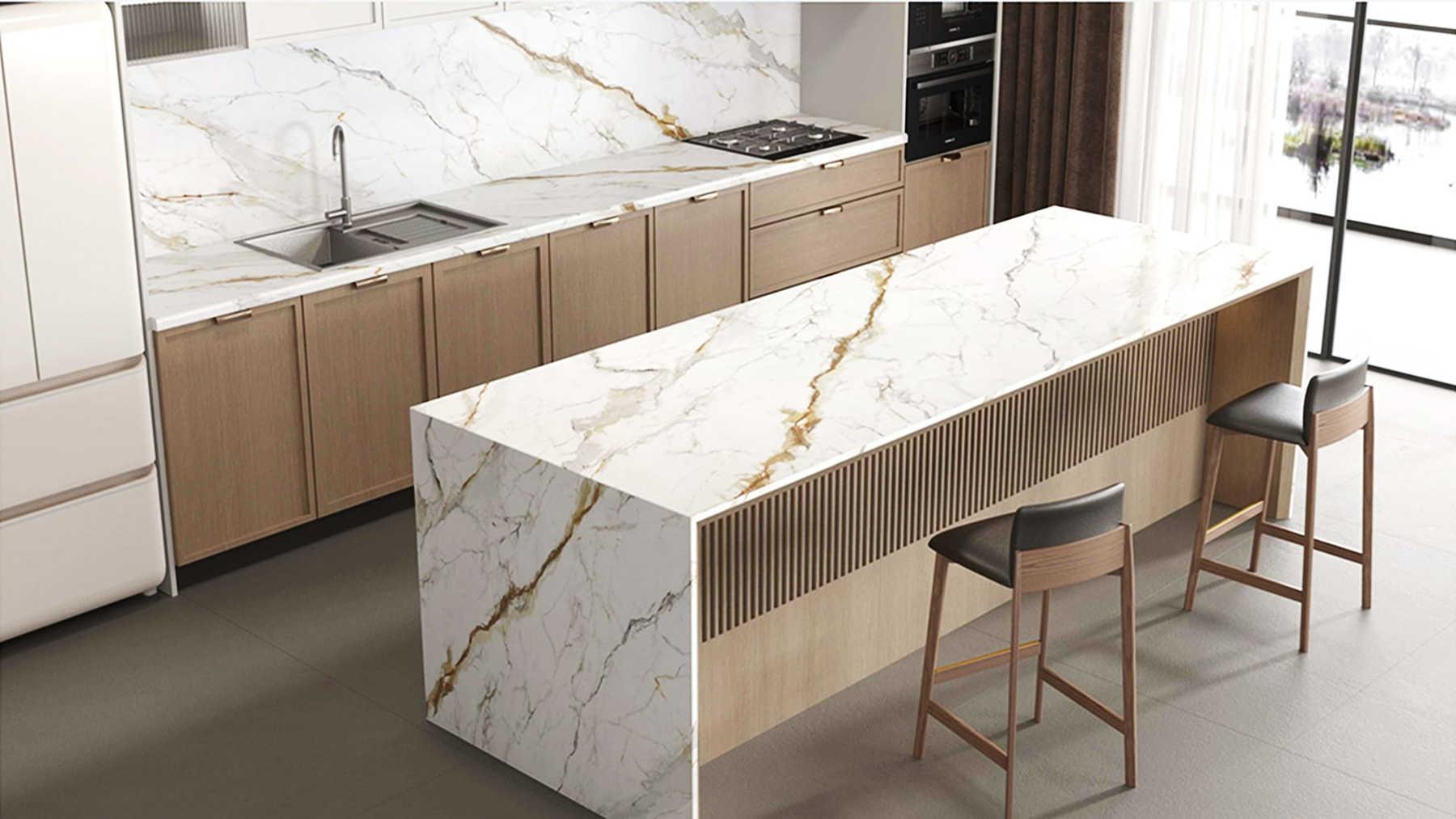
The printing technology can replicate ultra-realistic natural marble, travertine, onyx, concrete and rare luxury stone details. Designers can control vein direction, density, colour gradient and layout precisely. Custom patterns, graphic textures and matched continuous veining for big wall projects are achievable. The visual realism is far beyond what traditional quartz mixing can produce.
The main limitation is that the printed pattern is a surface layer only. Most standard printed quartz has ink penetration limited to the top 0.3–1 mm. If deep scratches, heavy grinding or over-polishing cut through the protective coat and printed ink layer, the plain base substrate underneath will show, creating a visible blemish that cannot be repaired by simple buffing. High-end through-body printed quartz is an exception, but it carries a much higher cost.
One Important Thing to Notice: Printed Quartz Stone has two types: No Full-Body and Full-Body. Full-Body type prices are normally much higher than No Full-Body type, so when people talk about it, it usually means No Full-Body type.
Full Comparison Table: Printed Quartz vs Traditional Quartz
| Item | Traditional Quartz | Printed Quartz Stone |
|---|---|---|
| Pattern | Mixed inside the slab (through-body) | Printed on surface only (thin top layer) |
| Look | Solid color, soft veins; limited marble effect | Realistic marble, onyx, custom veins; book-match available |
| Edge polishing | Safe, no pattern damage | Risk of rubbing off print if over-polished |
| Scratch resistance | Good; scratches are less noticeable | Light scratch OK; deep scratch shows plain base |
| Repair | Can be polished to fix minor scratches | Hard to repair once print layer is broken |
| Color fade | Low risk | Low-grade ink fades under direct sun |
| Stain resistance | Excellent (non-porous) | Good, depends on top coating quality |
| Price | Cheaper, easy to stock | 10–30% more expensive |
| Best for | Kitchen countertop, island, heavy-use surface, etc. | Kitchen countertop, island, tables, wall, vanity, lobby cladding, low-wear decor, etc |
| Not ideal | Projects needing ultra-realistic marble veins | Heavy commercial kitchen, outdoor exposure |
| Size(mm) | 3200×1600; 3500×2000; 3000×1500; 2800×1400 etc | 3200x1600mm |
| Thickness(mm) | 15mm, 18mm, 20mm, 30mm | 20mm, 30mm |
Price Compare
Quartz Stone Calacatta: 45-52 dollars
Printed Quartz: 50-53 dollars
Size 3200x1600x30mm, FOB price/Per Sqm
Quartz Stone Calacatta: 58-65 dollars
Printed Quartz: 68-72 dollars
Find us for the best price! WhatsApp: +86 150 5425 3293
Detailed Pros & Cons
Traditional Quartz
Pros
- Outstanding fabrication tolerance. Fabricators can freely polish, grind, shape edges and fix minor surface scratches without destroying the pattern. It is the most friendly material for countertop workshops.
- Stable long-term wear performance. Daily abrasion only wears quartz particles inside the slab, no risk of exposing a blank base.
- Mature supply chain, abundant stock, shorter lead time and competitive price.
- Low fading risk. Colour pigments are embedded inside the slab, not just on the surface.
Cons
- Limited design capability. It cannot reproduce the fine, flowing, high-contrast veins of natural marble and luxury stone.
- Vein randomness is hard to control. Large continuous wall surfaces may show inconsistent or repetitive patterns.
- Custom design options are restricted to existing colour formulas.
Printed Quartz Stone
Pros
- Superior visual realism. It is the most affordable way to achieve high-end marble, statuario and calacatta looks without natural marble’s etching and sealing problems.
- Unmatched design flexibility. Book-match, continuous vein runs, custom art textures and brand graphic patterns are available.
- Perfect colour matching for large-scale interior projects. All slabs can be printed from the same file.
- Non-porous quartz substrate inherits the core advantages of engineered quartz: no sealing required, resistant to wine, oil and common household spills when the top coating is intact.
Cons
- Higher fabrication skill requirement. Fabricators must reduce aggressive polishing on the finished surface and edges to avoid stripping the printed layer.
- Wear vulnerability on low-cost grades. Deep scratches, sanding and heavy abrasion are permanent damage to the printed pattern.
- Fading risk for cheap products. Poor ink and coating degrade under continuous direct sunlight, suitable mainly for indoor spaces.
- Higher cost and longer production cycle for custom patterns.
- Repair difficulty. Surface damage that cuts through the ink layer cannot be simply buffed out.
How to Choose Between Printed Quartz and Traditional Quartz
Choose Traditional Quartz If:
- You are making kitchen countertops, cooking islands, bar tops or commercial food prep surfaces with heavy daily use.
- Your fabricator needs to do heavy edge polishing, waterfall miter joints or frequent on-site adjustments.
- Budget is tight and you prefer reliable, low-risk material.
- You prioritise easy repair and long-term durability over hyper-realistic marble veining.
Choose Printed Quartz Stone If:
- The main goal is decorative visual effect: feature walls, TV background walls, bathroom vanity tops, hotel lobby cladding and reception surfaces with relatively light abrasion.
- You want seamless book-matched veining across many slabs for a luxury interior design scheme.
- You want marble aesthetics while avoiding natural marble’s acid etching and maintenance.
- You work on a design project with custom pattern requirements.
Important buying tip for printed quartz: Always confirm whether it is surface printed (No Full-Body) or through-body printed (Full-Body). Surface printed quartz is the mainstream low-to-mid option with the print-on-skin limitation; through-body printed quartz locks pigment deeper into the slab and supports edge polishing, but it is far more expensive and has fewer suppliers.
No Full-Body = Surface Printed
Full-Body = Through-Body Printed
Frequently Asked Questions
Q1: Is printed quartz real quartz?
A: Yes. The substrate is standard engineered quartz with the same quartz-resin composition. The only difference is the surface digital printing decoration process. It is not ceramic tile or thin printed film.
Q2: Does printed quartz need sealing?
A: No. The quartz base is non-porous. The protective top coat already acts as the seal layer. Do not apply extra wax or incompatible sealers that may damage the printed finish.
Q3: Can printed quartz go outside?
A: Most standard printed quartz is recommended for interior use only. Only products with certified UV-resistant ink and coating can be used outdoors; otherwise, the printed veins will fade gradually. Traditional quartz has much better outdoor colour stability.
Q4: Which one is easier to maintain?
A: Under normal light use, both are easy to clean with mild soap and water. Traditional quartz is more forgiving for accidental scratches and abrasion. Printed quartz needs softer cleaning pads; avoid scouring powder and hard steel wool.
Q5: Which type costs less?
Traditional quartz is cheaper, because it has existed for decades, many suppliers are competing, the price has come down a lot; Printed quartz stone is relatively new stone, only becoming popular in recently two years, the price is higher
Conclusion
Printed quartz stone and traditional quartz are not “good vs bad”; they are engineered quartz optimized for different priorities. Traditional quartz is the workhorse for high-function surfaces, valued for fabrication flexibility and long-term wear stability. Printed quartz is a decorative upgrade, built for stunning natural stone visuals and custom design freedom, with clear limits on heavy abrasion and post-processing.
Kitchen countertop buyers and fabricators usually lean toward traditional quartz; interior designers and luxury wall cladding projects often select high-quality printed quartz. Clarify your use location, fabrication plan and wear expectation before placing slab orders, and confirm the print type (surface print or through-body print) on printed quartz quotes.
About Us
We stand out as a leading manufacturer of artificial quartz stone slabs in China, proudly operating our own factory. We specialize in supplying top-quality quartz slabs to esteemed brand-owners, wholesalers, distributors, and fabricators worldwide.
Our products include quartz stone Calacatta series, Carrara series, Fine grain & Diamond series, Pure Colors series, Unique Patterns series, JADE series, and Printed Quartz Stone.
Quartz Stone:
Thickness: 15mm, 18mm, 20 mm, 30 mm
Standard Size: 3200x1600mm(126×63 inch)
Biggest Size: 3500x2000mm(137.8×78.4 inch)
Surface: Polished/Matte
Printed Quartz Stone:
Thickness: 20 mm, 30 mm
Standard Size: 3200x1600mm(126×63 inch)
Surface: Polished Glossy
Trade Manager: Hero Gegal
Phone: +86 150 5425 3293
WhatsApp: +86 150 5425 3293
References:
- Quartz Stone Catalog
- Quartz Stone Jade Series Catalog
- OSHA–NIOSH countertop fabrication guidance
- The U.S. International Trade Commission’s report on quartz surfaces