

Heat-transfer (Thermal transfer) decoration and inkjet printing are two different ways to add patterns to engineered quartz. They differ in how the image is applied, the look they can achieve, their durability, cost, production speed, and best uses.
1. How the Processes Work
Heat transfer
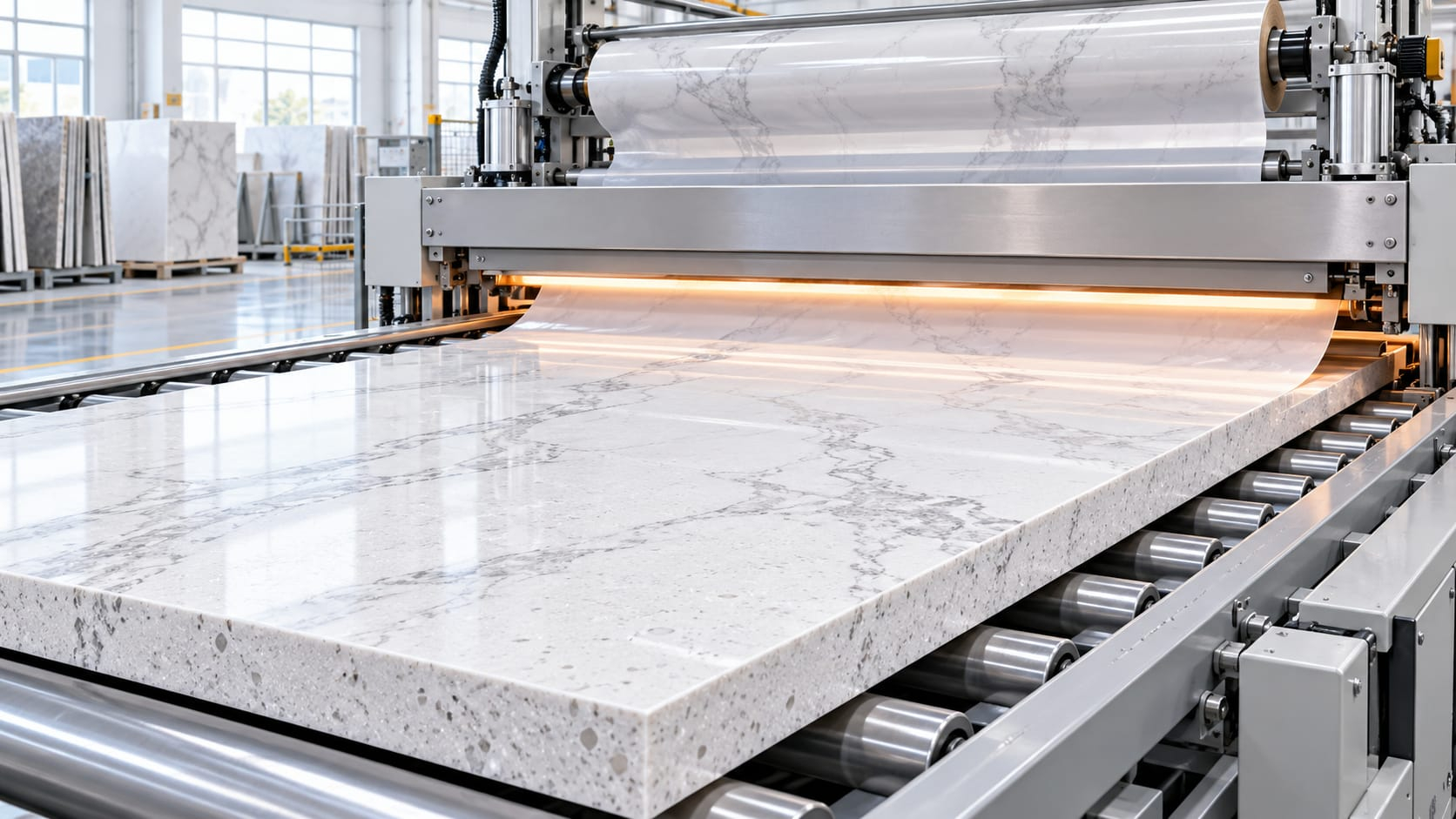
A design is first printed onto transfer paper. Heat—around 200°C (392°F)—activates the ink and transfers it to a compatible quartz surface. In engineered quartz, which contains resin as well as mineral particles, the color can diffuse into the resin-rich surface layer. It is more accurate to describe this as color entering a compatible surface system than as ink fusing into solid quartz crystals.
Inkjet printing
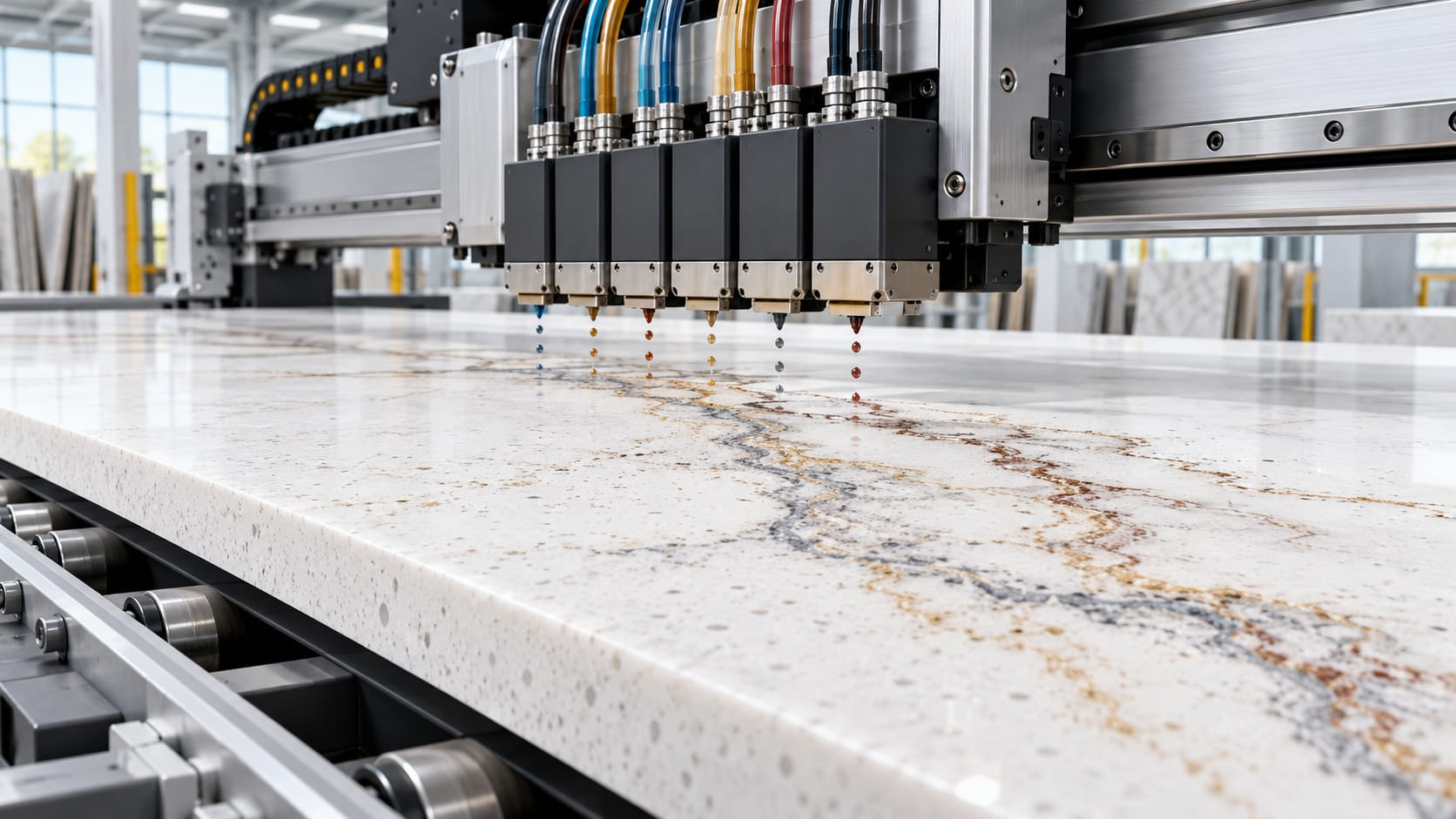
An inkjet printer sprays tiny droplets onto the quartz surface or onto a transfer medium. The image is built up from those droplets. Depending on the equipment, ink, and surface treatment, the ink may be cured on the surface or transferred through an additional finishing process.
2. Image Quality and Appearance
Heat transfer
Heat transfer can produce smooth color transitions and a broad range of color—up to about 16.7 million colors in the system described here. It can reproduce subtle gradients in photographs and landscapes, with crisp pattern edges and a natural-looking finish. It works particularly well for wood grain, stone veining, and other patterns inspired by natural materials.
Inkjet printing
Inkjet systems commonly operate at resolutions of about 600–1,200 dpi, making them suitable for detailed graphics, photographs, and complex color gradients. Depending on the printer and surface, ink spread or visible dot patterns may affect fine edges when viewed up close. Inkjet offers rich color and flexibility for customized designs, though adhesion depends on the ink, curing method, and surface preparation.
3. Durability
Heat transfer
On a compatible engineered-quartz surface, transferred color can bond strongly with the resin-rich surface layer. This can improve resistance to rubbing and scratching, making the method suitable for frequently used surfaces. The comparison supplied for this article reports about 92% color retention after lamination in a simulated UV-aging test, and describes the finished surface as suitable for indoor and outdoor use when the product system is designed for those conditions.
Inkjet printing
Inkjet ink sits on the surface or on a prepared coating. Without suitable curing and protection, friction and moisture can cause fading or blurring, and wear resistance may be lower. In the same comparison, the inkjet sample showed more than 30% fading under the stated test conditions. A protective laminate or coating can help, and indoor applications are generally the safer choice when the print system has not been rated for outdoor exposure.

4. Cost and Production Efficiency
Heat transfer
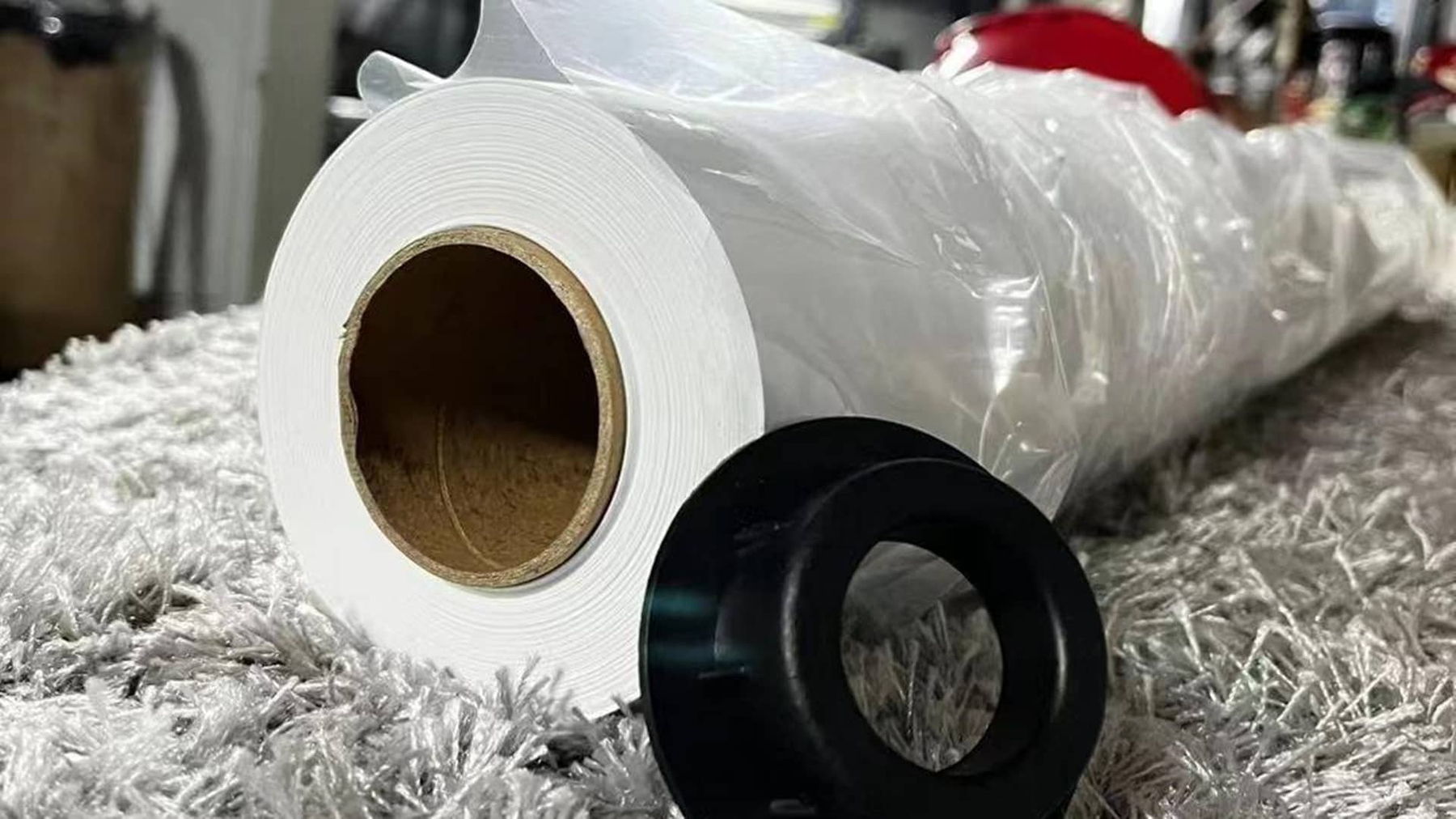
Startup costs are moderate and typically include a heat-transfer press, transfer paper, and specialty ink. The supplied cost estimate is about CNY 2.20 per sheet for transfer paper and ribbon—roughly US$0.33 at the October 2026 exchange rate. Heat transfer is well suited to batch production: transfer cycles are fast, maintenance is relatively straightforward, and durability can make the long-term cost attractive.
Inkjet printing
Initial costs can be lower, with an inkjet printer and cartridges as the main equipment expenses. Ink costs can add up, especially for full-color jobs. Inkjet is convenient for small batches and personalized orders, and makes it quick to produce samples or revise a design. Large runs may take longer, printheads can clog, and regular cleaning adds to maintenance costs.
5. Typical Applications
Heat-transfer decoration is used on items such as wood mouldings, picture and photo frames, furniture, wood flooring, and door trim. On compatible engineered quartz, it can also be used for kitchen countertops and bathroom vanity tops where the surface needs to withstand frequent use.
Inkjet printing is a strong fit for short runs, personalized designs, color photographs, complex graphics, and projects that need fast sampling and frequent design changes.
6. Which Method Should You Choose?
Choose heat transfer when you need:
- A hard-wearing, durable decorative surface
- Convincing natural patterns such as wood grain or stone veining
- Batch production and lower long-term costs
- A surface designed to withstand friction, moisture, or UV exposure
Choose inkjet printing when you need:
- Small batches or personalized designs
- A wide color range and complex artwork
- Fast prototypes and flexible design changes
- An indoor application where extreme abrasion resistance is less important
In short, heat transfer is a strong option for durable, natural-looking patterns and larger production runs. Inkjet is better suited to short-run customization, detailed graphics, and projects where design flexibility matters most.
7. Side-by-Side Comparison
| Category | Heat transfer | Inkjet printing |
|---|---|---|
| Process | Uses heat (about 200°C) to transfer a printed design onto compatible engineered quartz. | Applies ink droplets directly or through a transfer medium, then cures or finishes the design. |
| Appearance | Smooth gradients and natural-looking stone veining or wood grain. | Detailed, customizable graphics and photos; fine dots or ink spread may show up close. |
| Durability | Can bond strongly with compatible surfaces and resist rubbing and scratching. | Depends on the ink, curing, coating, and surface preparation; protection may be needed against wear and moisture. |
| Reported UV test | About 92% color retention after lamination in the described simulated test. | More than 30% fading in the comparison test under its stated conditions. |
| Cost | Moderate setup; supplied estimate is about $0.33 per transfer sheet. | Lower initial equipment costs; full-color ink can add up. |
| Production | Fast cycles suit batches and larger runs. | Suits small custom runs, samples, and revisions; large runs may take longer. |
| Maintenance | Relatively straightforward. | Printheads can clog and need regular cleaning. |
| Typical fit | Durable, natural-looking patterns for frequent-use surfaces and compatible countertops. | Short runs, custom artwork, photos, and quick prototypes. |
Related Videos
About Us
We stand out as a leading manufacturer of artificial quartz stone slabs in China, proudly operating our own factory. We specialize in supplying top-quality quartz slabs to esteemed brand-owners, wholesalers, distributors, and fabricators worldwide.
Our products include quartz stone Calacatta series, Carrara series, Fine grain & Diamond series, Pure Colors series, Unique Patterns series, JADE series, and Printed Quartz Stone.
Quartz Stone:
Thickness: 15mm, 18mm, 20 mm, 30 mm
Standard Size: 3200x1600mm(126×63 inch)
Biggest Size: 3500x2000mm(137.8×78.4 inch)
Surface: Polished/Matte
Printed Quartz Stone:
Thickness: 20 mm, 30 mm
Standard Size: 3200x1600mm(126×63 inch)
Surface: Polished Glossy
Trade Manager: Hero Gegal
Phone: +86 150 5425 3293
WhatsApp: +86 150 5425 3293
References:
- Quartz Stone Catalog
- Quartz Stone Jade Series Catalog
- OSHA–NIOSH countertop fabrication guidance
- The U.S. International Trade Commission’s report on quartz surfaces


